What is transcreation? The difference between translation and transcreation
Picture this. You spend three months crafting the perfect campaign slogan. It is sharp, memorable, emotionally charged. It works. 🎯
Then someone asks: Can we just translate it into Spanish?
The translation comes back. Technically correct. Grammatically fine. And somehow completely lifeless. The words are the same. The magic is gone.
That gap between the two is transcreation — and it is the reason global brands invest in it instead of translation alone.
- What transcreation actually means
- Translation vs. transcreation: the key difference
- Real-world examples: Nike, Coca-Cola, HSBC
- When does your brand need transcreation?
- How to work with a transcreation professional
What transcreation actually means
Transcreation is the process of adapting a message from one language to another while preserving its emotional impact, tone and strategic intent. The word blends translation and creation — and both halves are doing real work.
Consider the English expression “it is raining cats and dogs.” A direct translation into Spanish produces something bewildering to a native Spanish speaker. The image does not exist in that culture. But the feeling of heavy, relentless rain? That translates perfectly — through a completely different expression: está lloviendo a cántaros (it is raining in jugs), or the more dramatic están cayendo chuzos de punta (sharp sticks falling from the sky, point-down). 🌧️
The meaning changed its vehicle. The effect stayed intact. That is transcreation in miniature.
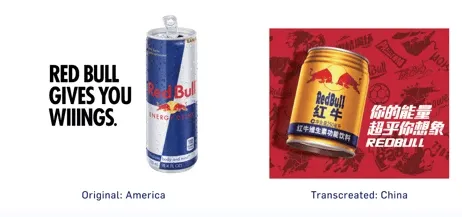
For brands, the stakes are considerably higher. A product name, a campaign slogan or a brand promise may carry years of creative investment. Translating it word for word into a new language risks stripping away everything that makes it work. Transcreation protects that investment by finding the equivalent impact in the target language — not the equivalent words.
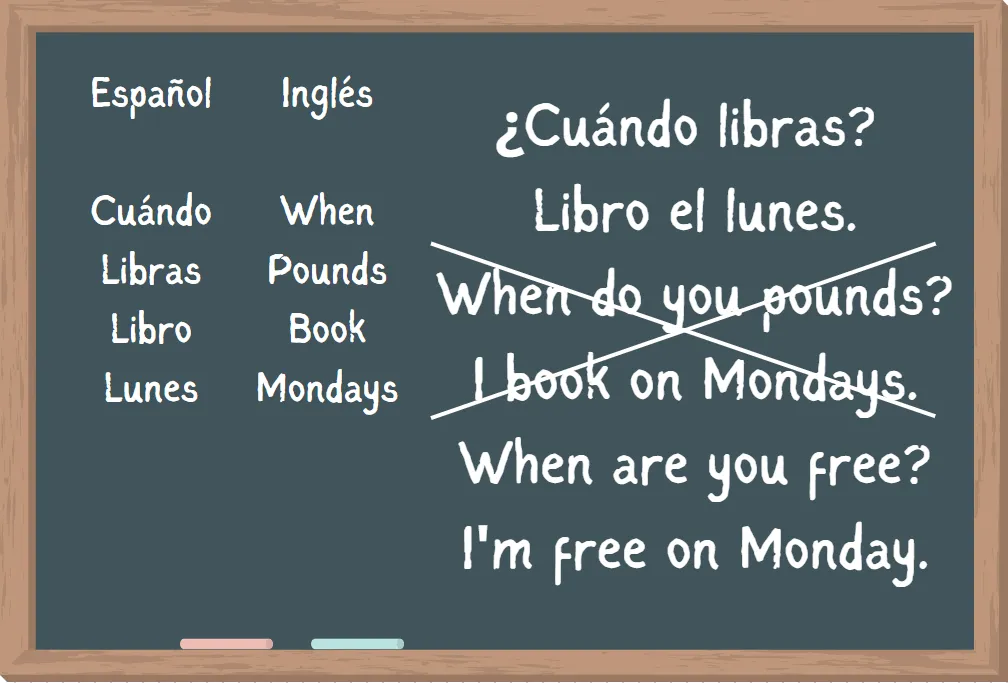
Translation vs. transcreation: the key difference
The clearest way to understand the distinction is to look at what each discipline is actually trying to achieve.
Translation asks: does this mean the same thing in the other language? ✅
Transcreation asks: does this create the same effect in the other language? 🎭
These are not the same question. A technically accurate translation of an advertising headline might be grammatically correct and semantically faithful — but completely flat. It may not use the idioms native speakers naturally reach for. It may carry a formality level that feels wrong for the context. It may arrive in a cultural vacuum, stripped of the references that gave the original its punch.
Transcreation allows the professional to depart from the source text wherever that departure serves the message. The brief for a transcreation project is not here is the text, translate it. It is: here is what this message needs to achieve, the tone it needs to carry and the audience it needs to move. Now write the version that does all of that in Spanish.
In practice, this means a transcreator may:
- Change metaphors when the originals have no cultural equivalent
- Adjust formality to match the conventions of the target audience
- Reorder information if the target culture responds differently to certain argumentative structures
- Write entirely new copy that captures the same emotional beat without any of the original words
This is not a failure of translation. It is a recognition that languages are not codes for one another.
I explored this distinction further — with real brand examples of what happens when companies treat the two as interchangeable — in this LinkedIn post.
Real-world examples: Nike, Coca-Cola, HSBC
Nike’s “Just Do It” travels relatively well across languages because its directness resonates in many cultures. But the campaigns built around it — the talent featured, the problems addressed, the cultural references — vary significantly from market to market. The phrase stays. The world around it is transcreated. 👟
Coca-Cola’s “Open Happiness” required much more active adaptation. The concept of happiness is not culturally neutral. In some markets the campaign leaned into collective joy; in others, into private, intimate moments. The words changed, the imagery changed, and in several cases the entire strategic frame shifted. The brand identity remained consistent. The execution was transcreated.
HSBC’s “Assume Nothing” is the cautionary tale. In several international markets, the campaign was mishandled in translation and came across as Do Nothing — reportedly prompting a costly global rebrand worth tens of millions. 😬
The problem was not the original concept. It was treating a creative message as if it could be transposed directly into another language without creative judgment.
Any brand running Spanish-language content for Spain will encounter the same dynamic on a smaller scale. Copy written for Mexico, Argentina or Colombia often needs significant work before it resonates with a Spanish audience. The vocabulary differs, the humour differs, the relationship with formality differs. These are not stylistic nuances; they affect whether the message feels native or foreign.
When does your brand need transcreation?
Not everything needs transcreation. Part of a good bilingual copywriting relationship is knowing where to invest the effort.
A useful rule of thumb:
- Translate when the content is informational or technical: product manuals, legal terms, data sheets, support documentation. Accuracy is the priority; emotional resonance is not the goal. 📄
- Transcreate when the content needs to persuade, motivate or create an emotional connection: website copy, taglines, advertising campaigns, social media profiles, email sequences, landing pages. 🎯
If a piece of content represents your brand publicly, and the person reading it needs to feel something before they take action — transcreation is worth the investment. To explore what this looks like in practice, visit our transcreation services page.
How to work with a transcreation professional

Transcreation projects go better with a strong brief. A good brief covers five things:
- The source content and its strategic context. Not just what it says, but why it was written that way. What was the team trying to achieve? What emotion or action should it produce?
- The target audience. Who they are, where they are, and what makes them trust a brand.
- The desired tone. Where your brand sits on the formality spectrum and what registers to avoid.
- Examples you admire. Even from unrelated brands — they help a transcreator calibrate your taste quickly.
- Room to adapt. A brief that locks every word in place is really asking for translation. Transcreation requires the freedom to find what works in the target language. 🔓
A professional transcreator will come back with options — usually two or three alternative approaches — so you can choose the direction that fits before committing to a full project. The process is collaborative. Good work comes from dialogue, not from a one-way handover.
If you are also considering a full bilingual content strategy for your brand, our article on bilingual copywriting explores how the two disciplines work together.